
Protect and Restore Your Smile
Dental bridges are a fixed restorative dentistry solution used to replace missing teeth. They restore function and appearance with natural‑looking materials designed to support long‑term oral health.

Why Patients Trust Us for Dental Bridges
✔ Comprehensive dental exams, digital X‑rays, and 3D imaging for precise planning
✔ Custom restorations crafted for proper fit, comfort, and enamel color match
✔ Advanced options including same-day technology and implant‑retained bridges
✔ Support with insurance benefits and transparent dental treatment plans
What Is a Dental Bridge?
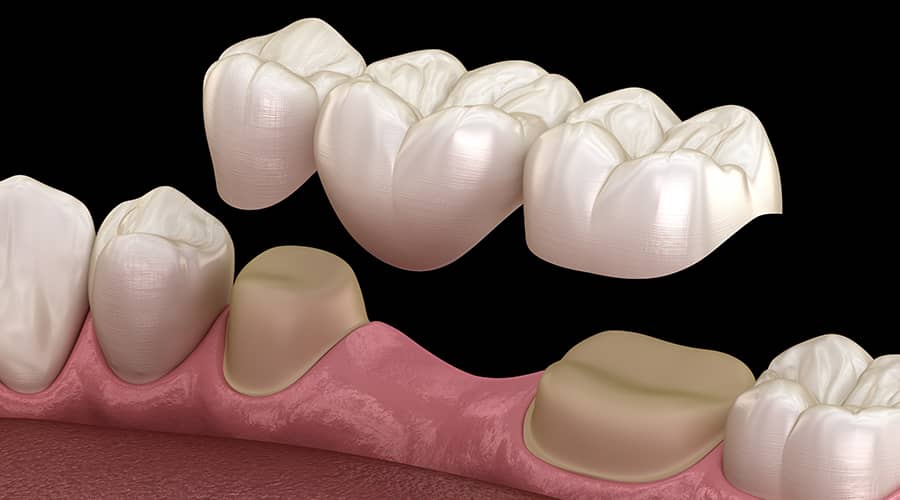
A dental bridge is a fixed dental restoration used to replace one or more missing teeth. It consists of a false tooth, called a pontic, supported by adjacent teeth or dental implants. When natural teeth are used for support, they are restored with dental crowns to securely hold the bridge in place.
Bridges help prevent problems that can develop after tooth loss, such as shifting teeth, changes in bite alignment, and bone loss. When crafted properly, an all porcelain bridge blends seamlessly with natural teeth and supports long‑term oral hygiene and function.
Types of Dental Bridges We Offer
We offer several options based on your oral health, goals, and anatomy.
Traditional Dental Bridge
A traditional bridge is the most commonly used option for replacing missing teeth. It consists of dental crowns placed on the supporting teeth on either side of the gap, with a replacement tooth in between. The crowns act as anchors, holding the bridge securely in place.
This type of bridge is known for its strength, durability, and predictable results when the supporting teeth are healthy enough to support crowns.
Cantilever Dental Bridge
A cantilever bridge is supported by two adjacent teeth rather than one. Because biting forces are directed onto one un-supported tooth (Pontic), this option is typically limited to areas with lower chewing pressure, such as front teeth. In some rare cases, a cantilevered bridge can be used with one supporting tooth. This is usually in the front of the mouth where chewing forces are minimal.
Cantilever bridges are used selectively and carefully planned to avoid excess stress that could damage the supporting tooth over time.
Maryland/Resin‑Bonded Bridges
A Maryland bridge uses a thin metal or porcelain framework bonded to the back of adjacent teeth instead of full dental crowns. This design allows the replacement tooth to be secured while preserving more natural tooth structure.
Because it requires minimal preparation, this option is often chosen for front teeth where appearance is important and biting forces are lighter.
This is also a good option as a provisional restoration for patients missing teeth who are not old enough for dental implants.
Implant‑Supported Bridge
An implant‑supported bridge is anchored to titanium implant posts rather than natural teeth. These implants act as artificial tooth roots, providing exceptional stability for the replacement teeth.
What to Expect During the Dental Bridge Process
Every dental restoration is customized, but most bridge procedures follow these steps.
1. Consultation and Treatment Planning
We begin with a full dental exam, digital imaging, and a discussion of your goals. Your dentist will review tooth replacement options, including dental implants, bridges, or other restorative options
2. Tooth Preparation or Implant Placement
For traditional bridges, the supporting teeth are prepared for dental crowns. For implant‑supported bridges, titanium implant posts are placed by an oral surgeon or periodontist. Once healing is complete, our team designs and places the custom implant restoration.
3. Bridge Fabrication
Your bridge is custom‑crafted using natural‑looking materials designed for strength and aesthetics.
4. Final Placement and Fit
Once ready, the bridge is carefully placed, adjusted, and bonded to ensure a proper fit, comfortable bite, and seamless appearance.
Benefits of Dental Bridges
Dental bridges provide both functional and cosmetic advantages:
- Restore chewing and speaking ability
- Prevent surrounding teeth from shifting
- Support facial structure and bite alignment
- Improve confidence with natural‑looking appliances
- Protect long‑term oral health
With proper care they can serve as reliable teeth replacements for many years.
Caring for Your Dental Bridge
Caring for your bridge follows many of the same principles as caring for your natural teeth:
- Brush twice daily and floss regularly
- Learn how to clean around your bridge using floss threaders or water flossers
- Attend professional teeth cleanings and routine dental exams
- Avoid chewing hard objects like ice or hard candy
Consistent oral hygiene and routine dental care play an important role in maintaining the comfort, function, and longevity of your bridge.
How Much Does a Dental Bridge Cost?
The cost depends on several factors, including the number of teeth replaced, the materials used, and whether dental implants are involved. Many insurance plans provide partial coverage for bridges as part of restorative dentistry.
Before treatment, we will review your insurance benefits, outline costs, and discuss financing options.
Schedule a Consultation Today
Dental bridges offer a reliable, natural‑looking solution for replacing missing teeth and restoring everyday comfort. At Morris Dental Solutions, we combine modern dental technology with thoughtful, personalized care to help you achieve a healthy, confident smile.
To book an appointment at our dental office in Buffalo Grove, call (847) 215-1511 or visit us at 195 N Arlington Heights Rd Ste 160, Buffalo Grove, IL 60089.
FAQs
Dental bridges are considered a long‑term solution but may need replacement over time due to normal wear or changes in oral health.
With proper oral hygiene and regular professional cleanings, bridges are designed to provide long‑lasting function and durability.
In some cases, a bridge can be removed and recemented if it becomes loose and the supporting teeth remain healthy.
Special floss threaders or water flossers help clean under the bridge and protect gum tissue.
Most bridges are fixed and not removable by the patient. Some implant denture options may be removable.
Morris Dental Solutions provides dental bridges and restorative dentistry services for patients in Buffalo Grove, Arlington Heights, Glenview, Des Plaines, Palatine, and surrounding communities.